Steps to Take When a Student is Struggling
One of the most common problems in the classroom is what to do when you see a student struggling. How do you help? How much help should you provide? Where should you start? Is it one thing the student is struggling with? Is it a variety of tasks? Are the student's struggles a result of gap in knowledge from a prior grade? As you can see, even though teachers feel passionately and want to help all of their students succeed, there are so many questions about how to do this.
This can be especially true with regards to students learning English as a second language (ESL). Even though many classrooms have rules about only using English and not communicating in their mother tongue, students often switch back and forth between their native language and the language they are learning. This is a reason why it is best to learn a new language at a young age. Students only need to develop one language acquisition center (Broca's area) in their brain, which makes switching either effortless or nonexistent. However, this phenomenon is not just restricted to ESL.
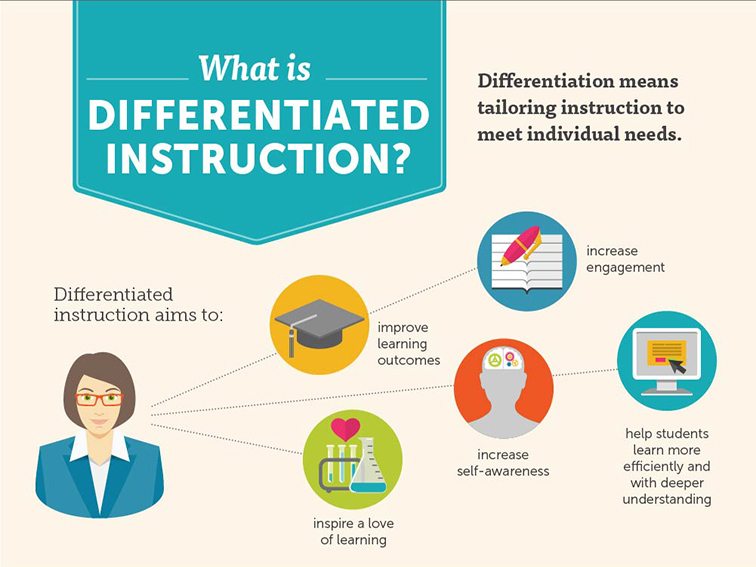
This is why, in today's day and age, differentiation is important in teaching. By doing this, we can reach all learners. This can be done through universal design for learning, creating personalized learning plans, or adding more than one method of delivery to a lesson.
However, we also need to differentiate how we reach students that may have a potential learning disability, qualify as 504, or are on (or in need of) an IEP. This flowchart provides an example of how to do that.


Comments
Post a Comment