Posts

My Bio and Teaching Philosophy

Image
  My name is John Emanuelson.  I have been teaching in Asia for over 14 years.  I began my journey through the world of education working at an after school English academy in South Korea.  After 10 years in South Korea, I decided to transition towards teaching Adults English, so I completed my CELTA and moved to China.  I worked in this field for a couple of years, but due to Covid-19 and nostalgia for the classroom, I moved back into the field of primary and secondary education.  Currently, I am enrolled in a teacher training course and it is my goal to be certified by the end of 2022 or summer of 2023.   Looking back on the last 14 years, it is amazing how I got here. What started out as an opportunity to travel and experience life abroad has turned into a vocation.  I feel a sense of accomplishment and fulfillment from teaching that I have never gotten any other occupation, which is why I have committed to becoming a qualified educator....
Designing Differentiated Assessments

Image
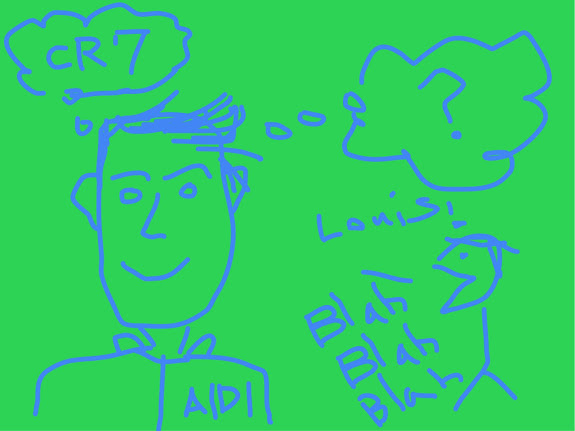
This post is a continuation of module 5, which was about formative assessments.  After creating 3 formative assessments, I had to then  design differentiated assessments  to meet the needs of all students in my class, not just the high level students.  The first one that I did was on my student Louis, who is pictured here.  Louis was a student that I taught last year.  I really liked him and we got along very well, but he is definitely someone who would benefit from being on an IEP.  I did differentiate with regards to homework for Louis, but never for assessments (the thought never occurred to me).  Going forward in the future, I might try to keep that in mind, although I do worry about complaints of unfairness.  

PBL- Rubrics, Monitoring, and Remediation

Image
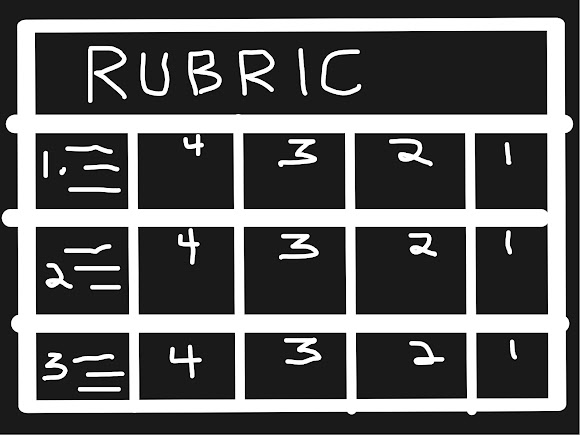
 Rubrics are essential for measuring progress, especially when it comes project based learning (PBL).  The first link is for a  PBL and rubric  that I created when I was teaching a first grade class.  I originally created this PBL and rubric during module 3, but added to it in module 5.   To begin with, I created the standard rubric that went from 1-4 and had criteria ranging from insufficient to outstanding.  To be honest, I just copied the Moreland format since that is what I was used to being assessed on.  After that, I created a single-point rubric for the students. I really like the idea of a single-point rubric since, in my limited experience with PBL, I find the students do not look at the rubrics (even when they are in their native language). Upon completing their project and receiving a grade that was lower than expected, student always express shock.  I follow this up with the question, silly as it may seem, as to whether or no...

Unpacking a Standard

Image
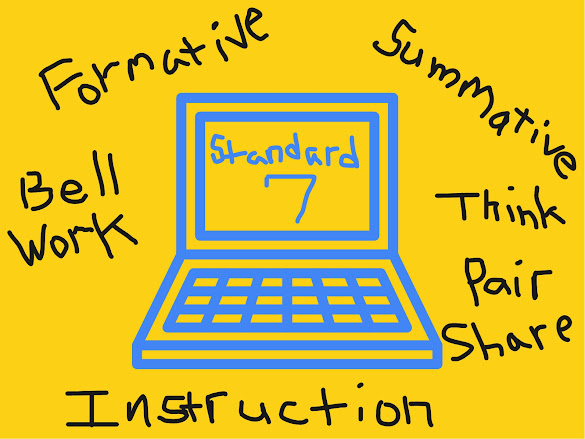
  In education, it feels as though  standards  are tantamount to the Ten Commandments or the 11 general orders that I had to learn in the Navy.  Learn them, love them, and most important - understand them.  This last part, I think, is the trickiest since the standards are packed full of verbiage and ideas that are, in my opinion, not always the easiest or breeziest to read.  That being said, they are the basis of the lessons and what we want the student to accomplish in the end.  Without these standards, I think it is fair to ask what are we teaching and why.  Below is a video I made in module 6 about unpacking standards.  

Communicating Results to Parents

Image
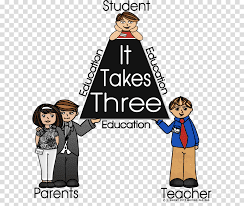
  At many of the places I have worked at in Asia, I have not had much contact with parents.  This has been because parents cannot speak English or feel too embarrassed to try and speak English and sadly, my ability in foreign languages is quite poor.  Another reason is that schools might not want foreigners to communicate with parents for fear that they might be unaware of the social customs and would either cause a parent offense or to lose face.  Either way, I have not had much experience  communicating results to parents .  Therefore, when I have to communicate results to a parent, it can fill me with a sense of trepidation.   This Canva presentation, created with Justin Sheehan, was designed to assist a teacher when communicating with parents.  It is something that I will refer to the next time I have parent-teacher conferences.  

Response to Intervention

Image
Response to intervention (RTI) is a program that identifies children that are struggling as early as possible tries to give them the necessary support they need.  To be honest, there is a cornucopia of literature on it and in many ways it seems as though it can be complex to implement it.  Writing about this and how I would apply it in the classroom was one of the more arduous and time consuming assignments for me.  I did not know where to start or how to attack the assignment, so in the end I probably wrote a lot more than was necessary.   The school I work at currently might have a  response to intervention  program,  but if they do, I have seen no evidence.  The middle school is made up of three grades- 7, 8 and 9.  I currently work in 9th grade and I have a very low level class of 9th graders that I think are in need of an intervention.  Many of the students have an undiagnosed learning disability or just an absolute lack o...

Lesson Plan

Image
Lesson planning, if teachers are honest, can run the gamut from those that see it as a necessary evil to those that loathe doing it with absolute disdain.  For me, when I first being a job, I find them a valuable too to fall back on but the more I become comfortable in a position, the less I like doing them.  That being said, creating a lesson plan can be valuable since it prepares one, if well done, prior to entering the classroom.   Nowadays, in my opinion, so much is expected of teachers in the classroom and it is difficult to be continuously aware of it without putting down what needs to be done on paper.  Even if you don't bring it into the classroom, it can still help with the instruction process since committing it to paper (should) demonstrate that you have thought about importance things such as the assessments that will be used, how to differentiate for low, high, ELL, and students on IEPs.  This is the first (extensive)  lesson plan  ...

Backward Mapping

Image
The concept itself seems quite simple, but prior to taking this course, it is not something I had ever thought of.  Looking at the expected lesson standards that students need to master by the end of a specified time period and working back from that to create lessons, assessments, and learning outcomes makes a lot of sense.  The lesson standards can be quite dense and difficult to understand, so I like the collaborative aspect that backward mapping, I believe, requires if it is to be well-done.   For this module, I was required to utilize  backward mapping  to create a curriculum map.  Again, prior to taking this course, the thought of creating a curriculum map seemed overwhelming.  However, I can see the wisdom of employing backward mapping to achieve this goal.  If I become a senior teacher at my current place of employment in the fall semester, I plan to try and create curriculum maps.  Currently, we do not have one, but I think they...

An Assortment of Assessments

Image
  Assessment is an integral part of the human experience and we are constantly doing it.  For instance, whether is internally checking how our physiological reactions are affecting our emotions, judging the food at a restaurant, or watching the local sports team lose to their arch rival, we are performing some sort of assessment.  Even though we are continuously engaged in doing this behavior, the term assessment can be loaded and it can cause anxiety in the person being assessed.   Therefore, some formative assessments (ex: thumbs up/down, informal chat, etc.) can be conducted so that the person being assessed is unaware.  That is the great thing about formative assessments- they are ongoing and often provide an abundance of data that might not be accessible through more traditional means such as summative assessments.   Prior to taking this course, I was not familiar with the term formative assessment nor how to conduct them.  Since taking...

Using Assessment Data to Inform Instruction

Image
To be successful in the modern world, it is essential that students learn to collaborate .  One was to teach students to work together is by having them work together in small groups.  There are different ways to group students and each method has its positives and negatives .  For simplicity's sake, I will focus on heterogeneous (different) and homogeneous (same) groupings, and these will be reflected in the six sample data sets below as well as a Padlet presentation on using assessment to inform assessment. Presentation of Student Grouping and Data (Padlet) Sample Data Set- Grouping Spreadsheet (Whole Class) Sample Data Set- Heterogeneous Groupings Sample Data Set- Homogenous Groupings Sample Data Set- Heterogenous Mixed Groupings Sample Data Set- Heterogenous Quiz Groupings Sample Data Set- Heterogenous Homework Groupings

How I Use Technology in the Classroom

Image
 Technology is ubiquitous in the 21st century. It permeates every aspect of life from work to leisure and education is not stranger to this either.  Just as society continues to embrace technology, to the point of what, in my opinion, feels like a sort of fetishization , teachers will have to do the same as well.  This is for a variety of reasons such as the gradual movement towards distance and/or hybrid learning and the increase in efficiency that technology promises.   This video shows some of the technology that I use in my classroom such as an interactive whiteboard, a Chinese version of Class Dojo, and power points utilizing a variety of media to present material in more than one way.  Videos, animations, and GIFs are all a popular way to deliver information in a variety of manners that supersede and will eventually eliminate the traditional lecture.   To be honest, just like the IBM Selectric typewriter and the floppy disk, the things ...

4 Factors to Consider When Making Decisions on Teaching and Learning

Image
Education is now seen as being tantamount to success.  People who are able to attend and graduate from university have a higher income than those that do not.  Likewise, through a variety of surveys and reported opinions in a variety of media publications, university graduates are reported to have a greater civic participation and overall quality of life .  No longer is it enough to just have a high school diploma and one day in the future, it might not be enough to have a bachelors degree .  As the level of knowledge required to function in an increasingly technologically driven society increases exponentially, the skills that secure employment will become even more important. However, in my opinion, employers will still link many of these skills with credentials.   Therefore, parents and politicians will be put even more emphasis on ensuring future generations' learning.   To meet these demands, ideas and industries have proliferated on how to...

China's New Homework Policy

Image
Education does not happen in a vacuum.  Just as with abortion, gun control, and civil rights, it is a politically charged topic that inflames passion on all sides of the spectrum. Political bodies often pass laws for a variety of reasons, which in turn can create a confusion as well as a greater workload for teachers.  The Chinese government, in a bid to arrest the decline in its population , has issued a series of decrees on education.  During the summer of 2021, it practically abolished the after-school education industry.  The reason given by the government was the amount of spending by parents on this sector was a cause of families only having one or no child. By eliminating this industry, it is hoped that parents will feel that they have a greater amount of capital and might be willing to increase the size of their family.   Likewise, the government has also changed the amount and type of homework given to primary and secondary students.  My vid...

Three Case Studies

Image
Often times, as teachers, it feel as though we are stretched to our limits.  Between the number of students, the marking, and the need to meet administrative requirements, it often feels as though we might be missing what is happening.  One way to counteract this is to write a case study on your student(s).  By doing this, you can get a greater amount of detail that may have gone unnoticed prior to writing it.   These are  3 case studies  of my students.  Each student represents a different level in my class.  The first student, Flora, is a gifted student that needs to have extra material prepared to avoid boredom.  William is a student who might have ADHD.  He acts impulsively and can be aggressive towards both teachers and other students. Finally, Rain is a very low level student who speaks virtually no English.   This was written at the beginning of the school year and it was a reflection of my concerns as a new teacher...

IDEA Disabilities, Incidence, Assistive Technologies, Other Accommodations, References

Image
As a teacher or in life, you have come across someone with a learning disability.  Globally, somewhere between five to nine percent of the population has a learning disability .  Dyslexia  (15-20%) and ADHD (9.4% in the USA) are the most common ones amongst children,  In the past, children would have been removed from the general population and assigned to special education classes .  However, that is no longer the case any more.  Students with learning disabilities, unless absolutely necessary, are no longer excluded.  Instead, as inclusivity becomes more widely practiced, students with learning disabilities are being included as often as possible in general education classrooms.  This is beneficial for them since it means that they are no longer being singled out, but instead are being given the support they need.  Likewise, it is g ood for students who do not suffer from learning disabilities since it gives them a chance to interact wi...

Steps to Take When a Student is Struggling

Image
One of the most common problems in the classroom is what to do when you see a student struggling. How do you help?  How much help should you provide?  Where should you start?  Is it one thing the student is struggling with?  Is it a variety of tasks?  Are the student's struggles a result of gap in knowledge from a prior grade?  As you can see, even though teachers feel passionately and want to help all of their students succeed, there are so many questions about how to do this.   This can be especially true with regards to students learning English as a second language (ESL).  Even though many classrooms have rules about only using English and not communicating in their mother tongue, students often switch back and forth between their native language and the language they are learning.  This is a reason why it is best to learn a new language at a young age.  Students only need to develop one language acquisition center (Broca's area...

Teaching & Technology- A VLOG

Image
In prior years, physical strength or the ability to memorize significant amounts of information might have been critical elements in the workforce.  However, technical knowledge has overtaken this I believe.  Comfort using and manipulating a variety of applications and platforms will be essential by 2030 .  Therefore, it is essential that teachers know how to use technology as well.  Far too often, the desire to use technology is there, but no the ability.  To counteract, this schools must train teachers.  This VLOG is a synthesis of four interviews that I conducted with teachers at my school and the survey results of students in my class.  I asked the four teachers questions about the importance of technology in the learning environment and how they use it.  I also surveyed my students on their interests and the technology they use at home.  The video below has the results of the interview and the surveys.  

Student Centered Activities

Image
I think it is safe to say that nowadays it is frowned upon for a teacher to stand in front of a class and lecture.  No longer do we want students to sit and passively absorb information.  Instead, we want them to be more than just members of the audience.  We want students to take ownership of their learning and become active participants i the process.  To do this, teachers need to make their lessons more student-centered.   However, designing student centered activities can be a difficult endeavor.  This is a link to a  Wakelet  that I collaborated on with my cohort.  It has strategies to make assessment, teaching reading, the design of the physical environment and use of technology, differentiation, and collaboration more student-centered.    I am excited to try these different methods out in the classroom in the future.  

An In-Depth Case Study

Image
In the beginning of the year, I produced a case study on three of my students.  This case study follows up on one of them,  William,  but in greater detail.  I attempted to analyze the school, the role of culture, as well as his speaking, listening, reading, phonics, and socio-emotional abilities.  In addition, I looked at a variety of techniques that could help him in these areas.   I am happy to report that even though William continues to struggle with reading and listening, he has shown improvements in his phonics and socio-emotional skills.  He is less aggressive and is trying harder to write even though mastering penmanship is a difficult skill for him.   This case study was produced on an app called Emaze.   

The Future of Learning

Image
As society's reliance on technology increases, it changes the path of education.  A wide array of pundits believe that we will move away from the traditional model of school, which t rained people for factory work , and towards a different paradigm that values problem solving, critical thinking, collaboration, and an ease with using many different modes of technology.  This new paradigm could also be referred to as 21st Century skills.   (Source: Teachtought.com. (2022). 3 Knowledge Domains for the 21st Century Student. https://www.teachthought.com/the-future-of-learning/knowledge-domains-for-the-21st-century-student/) In this  video , I cover this change as well as what I think the five biggest challenges for students will be in the future.